GDK Kiosk
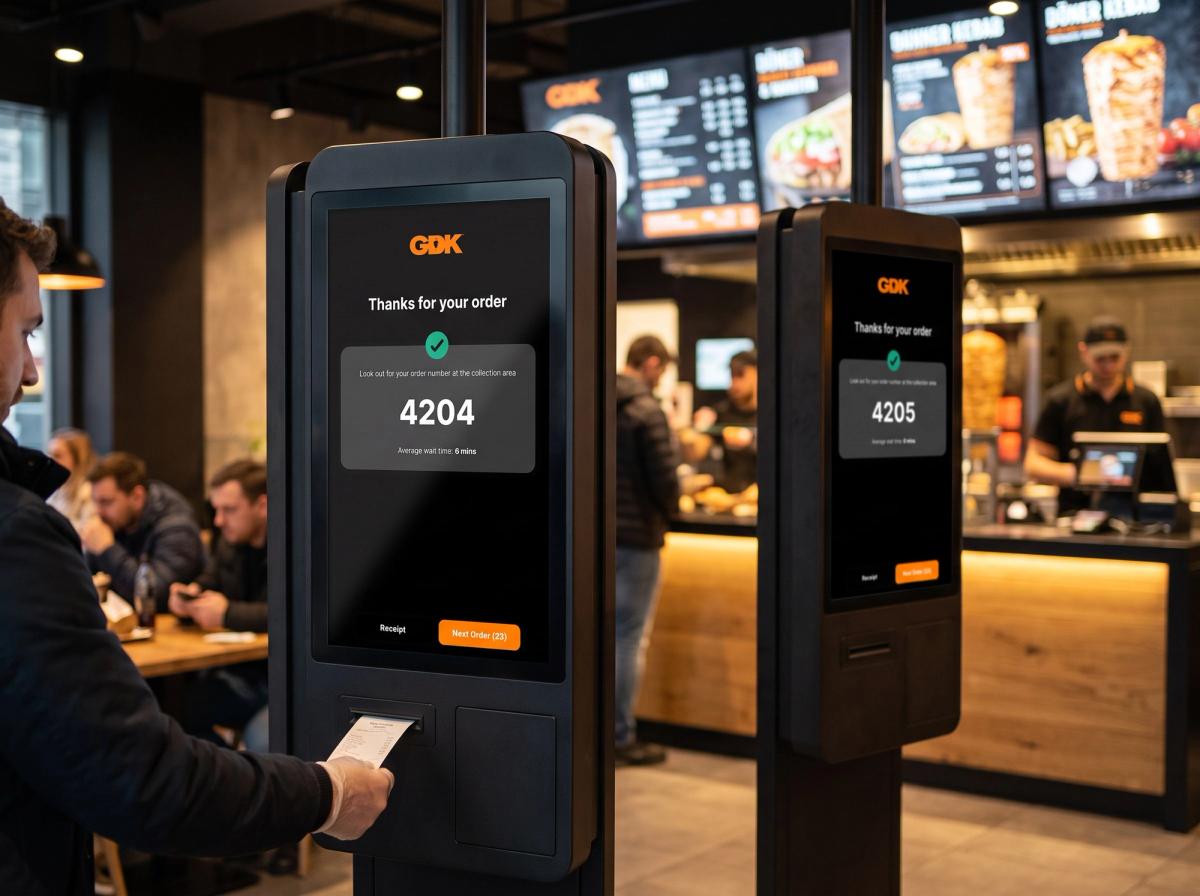
Everyone treated the kiosk as another POS screen. Replacing German Doner Kebab's estate meant proving otherwise, with the brand leading.
- Client
- GDK
- Role
- Head of Product Design
- Timeframe
- From 2022
- Sector
- Quick-service restaurants
- stores live in the first year
- 100+
- months from concept to estate-wide
- 9
A kiosk is not a POS screen
From the behemoth of Oracle all the way down to 3S POS, everyone treated the kiosk as another POS screen. That is absolutely not correct.
A POS is operated by a trained member of staff who knows the software and knows the menu. If a customer wants a large Coke with no ice, it doesn't matter, because the member of staff is handling that. Kiosks don't have that luxury. The person standing in front of one doesn't understand the menu structure, doesn't understand a POS, and may never have used one in their life.
A kiosk is a self-serve digital experience. It needs everything the POS can do underneath it: the menu data, the payment, the route to the kitchen. But you can't simply render a POS menu on a screen.
GDK's kiosks came from 3S, and they had exactly that problem. They weren't giving guests the experience they needed. Because a POS company wasn't focused on progressing the kiosk, they were falling behind the market on things like loyalty. And they didn't represent the GDK brand, as GDK saw it then or wanted it to be.
When the 3S contract came to an end, we were on the shortlist. Some of our team had worked with theirs before, they'd been impressed at our stand at ExCeL, and we'd been tracking it. We made sure we were right there, and they trusted us.
It's a new kitchen, not new cabinets
Changing your technology is like changing your kitchen. You're not just updating the cabinetry. You might change the layout, or knock through to the next room like you've always wanted.
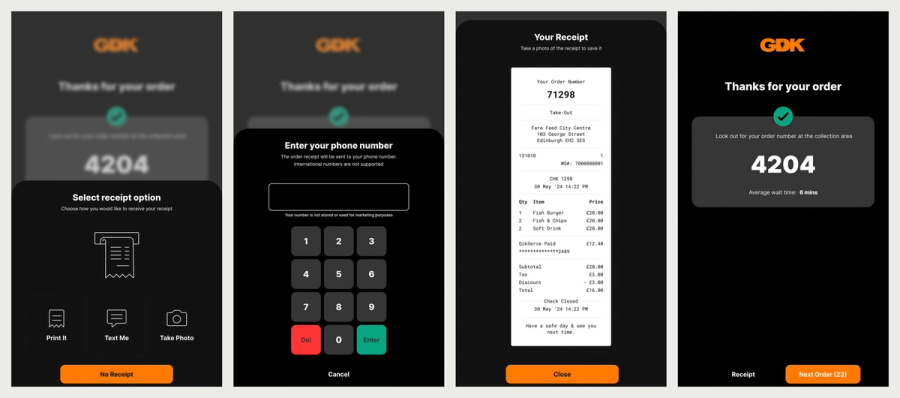
GDK treated it that way, and they were right to. They had digital interaction, but they had never had a planned digital experience. I spent months consulting with them to build one: what it should feel like, how much friction it could carry, how it would meet their commercial goals. With Samantha Backhouse, I stewarded the relationship and turned their requests into technical terms. When they asked for a feature or a menu structure, what did that actually mean?
Driving sales is not just getting more items into the basket. Some items are high margin and some are low. Some businesses want to shift their slow sellers; others want to sell more of their best. Almost no operator has those rules written down. They live in people's heads, and we had to bring them out.
The same was true of the people. Marketing wanted the menu to be experience-led and to push new items. Ops wanted the kiosk to favour whatever the kitchen could make fastest. Brokering that gave GDK a cohesive digital strategy for the business, not just for the kiosk. Then GDK changed its marketing leadership, and the finished brand work went back through a new round of stakeholders. That happens whenever leadership changes.
The software carries the burden, not the guest
What GDK wanted most was what the platform already did best. The QikServe kiosk didn't assume knowledge. Its meal builder and menu discovery carried the burden so the guest didn't have to. GDK had menus, stacks, deals and house codes to optimise, and needed someone to turn them into a journey they owned. As they went deeper, we moved them onto a professional services plan, as we had with El Pollo Loco, and built more configuration into the back end.
Most of what they asked for early on didn't ship, because it shouldn't have. Buttons on the left instead of the right, that sort of thing. It's natural, and you let people say it. Then you explain, openly and warmly and without embarrassing anyone, why things are where they are. Centred buttons work for left-to-right and right-to-left languages, and they are more accessible.
What did ship was sharper upselling and cross-selling. Every brand runs it a little differently, so we added logic and contingencies in the back end. Kiosks live in low-connectivity environments and often run offline, so the cross-sell was built on logic, not handed to AI in the hope it would work.

A kiosk image is not a social media image
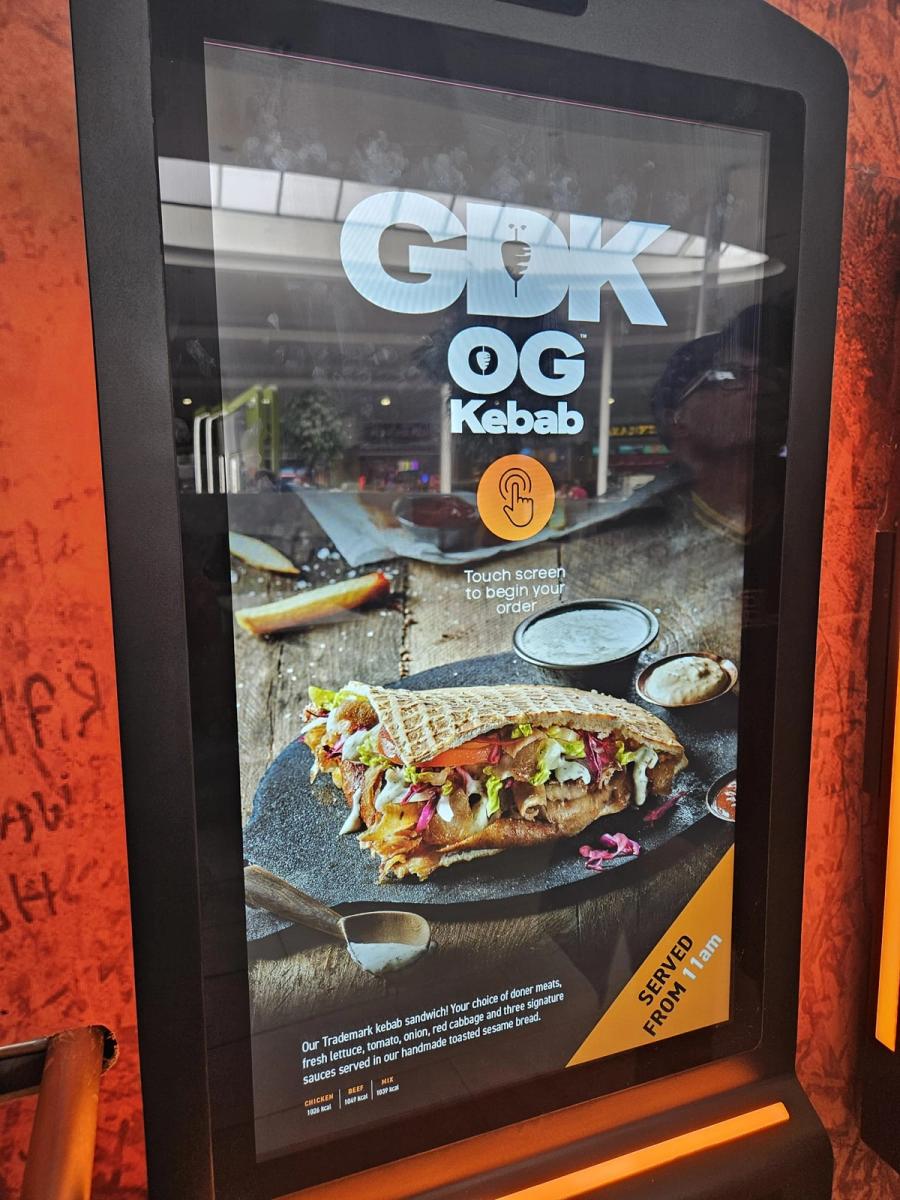
It isn't a website image, a brochure image or a digital menu board image either. When the kiosk was first built, almost no operator had decent photography or would invest in it, so we kept images small and leaned into negative space, which is good for cognitive load. By the time GDK arrived, guests knew how to use a kiosk and operators knew images had to be big, beautiful and properly invested in. GDK, El Pollo Loco and the wider market all wanted it at once, so we built it.
Then came months of guiding GDK's team on photography: what to deliver, how it affects guest experience and revenue, and how to shoot it so that next year's images match this year's.
Nobody knows what's in their estate
Nobody keeps a perfect record of what their estate actually looks like: every piece of hardware, every software version, every integration. Franchises multiply the problem, and even a chain of two or three stores rarely has a complete list. So you either audit what's there, or you build a plan robust enough for whatever you find. We front-loaded the planning. It delayed the start a little, and the rollout was faster for it.
Replacing a live estate is not installing one. Before you can turn the old system off, a matrix of things has to be true. Brand wants certain messaging, which may depend on screen size or hardware. Accounting wants certain payment types, which comes back to hardware and implementation. Ops wants the menu structured a certain way for the kitchen.
You need one true north to hold it together. Here it was the end of the 3S contract. Every time information was needed or a compromise had to be made, we brought everyone back to it, and it decided the pilots and the rollouts. Getting a kiosk into the client's own offices helps enormously. It transforms a project.
What leads depends on the client. For an accountancy-driven business it's payment type; for others it's order and delivery times. At GDK the brand led, and implementation and ops rewired the estate underneath it.
It broke all their management systems
Our enterprise customers were our Formula One division, our rally division. They pushed, tested and developed the products in ways the mass and middle market never could.
Access doesn't work that way. It is a mass-market player, mid-market at times. They are market followers: they run products lean, cheap and generic, and that is their strategy. GDK landed in the middle of QikServe's integration into Access, and a project that takes a long time to land and longer to roll out sits badly against weekly sales updates, quarterly reviews and "where's this deal?" They aren't built to have projects under management for that long.
It broke all their management systems. So we kept reassuring them, and we helped them live with that discomfort.
No drama
The nice thing about being in design is that you're often not there for the emergency calls. The flip side is that you're there for the launch.
We booted the first kiosk on in the morning with the implementation team and ordered breakfast. We did it again when the rollout reached another city, and again after that. The team was spread across several locations, so we shared it more than once, for the price of a little travel and a few meals.
There was no drama. It just worked.
Who made it work
Sam Hendricks, from implementation, was the star of the show. He was the glue and the grease that made everything else work, and we can't be glowing enough about him.
Simeon Mass, implementation. Samantha Backhouse, Strategic Sales, who stewarded the relationship with me from start to finish. David Woodison, the commercial lead. And Jagoda Malyszek, product designer on the kiosk and its design system.
Don’t take my word for it
Walk into a German Doner Kebab and order on the kiosk.