Rent turning into a deposit

- Client
- Quoin
- Role
- Co-founder and CEO
- When
- 2020–2022
Co-founder and CEO of Quoin, a PropTech venture from the University of Edinburgh. Net-zero homes and a rent-to-deposit model won the European final of ClimateLaunchpad 2020 and took us on to the Global Grand Final.
- Net-zero homes paired with Rent-to-Deposit, where 30% of each rent builds the tenant's deposit.
- Won the European final of ClimateLaunchpad 2020 and competed at the Global Grand Final.
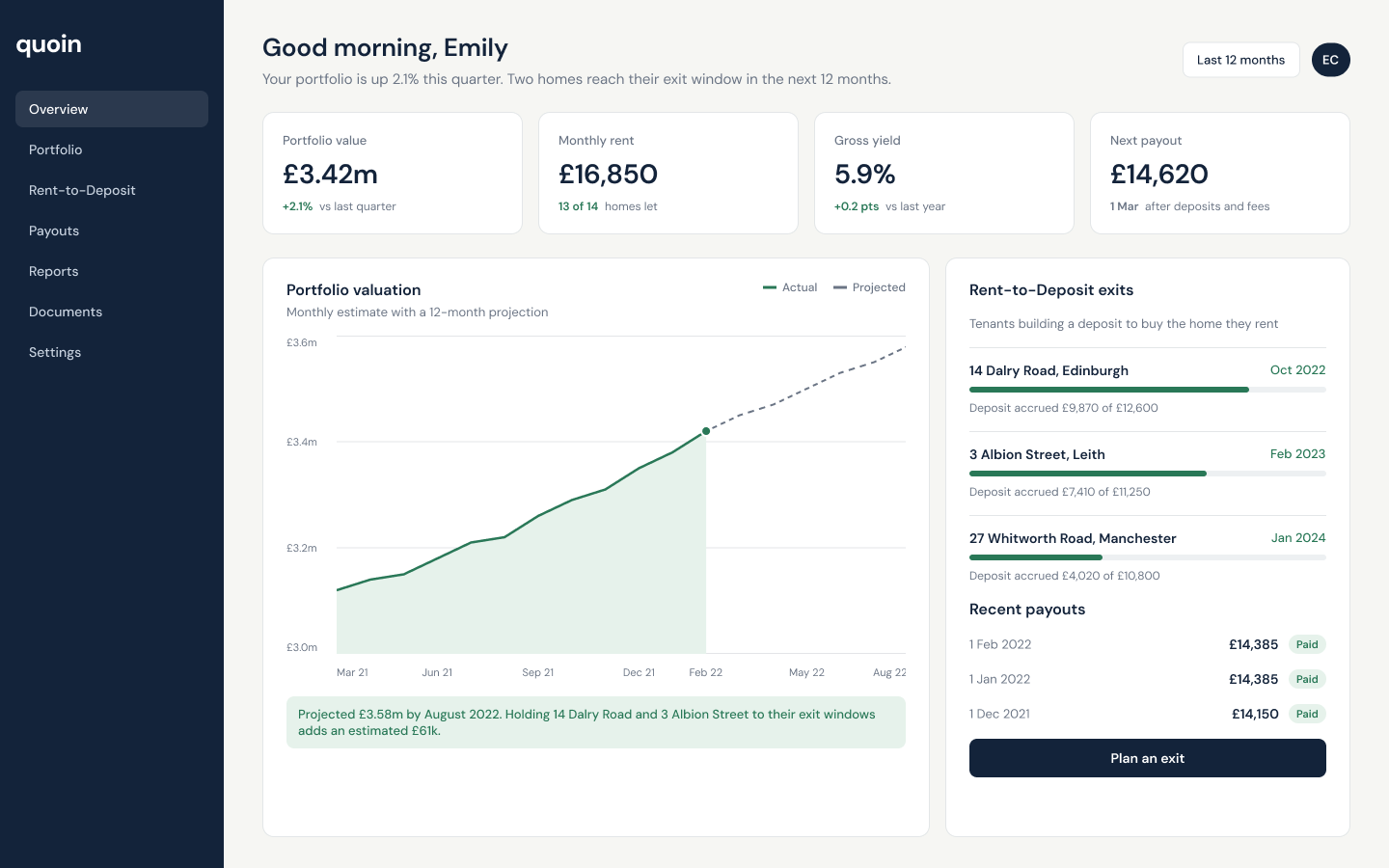
- Turned into a seller portal for landlords planning an exit, rebuilt here around Emily and John.
- Quoin Systems now gives buy-to-let investors valuations, growth projections and yield.
Two problems at once
Quoin set out to fix two problems in the housing market at once. Homes cost too much to build and run. A deposit takes most first-time buyers the best part of a decade to save. I was proud of that ambition then and I still am.
I'd long been fascinated with prefab buildings and the reasons they've never taken off. They need a different type of finance from traditional construction and it hasn't suited the large house builders to invest in the factories that would let them scale. My question was what would happen if we applied a financing model to prefab housing and made it affordable.
It began in 2020 as FabHab, a pitch on my MSc in Entrepreneurship and Innovation at the University of Edinburgh. Five of us turned it into a company. I took the CEO role from the start.
- Richard MurphyCEO
- Alexander KoveleskiCFO
- Alexandra Filimon
- Supraja Balasundaram
- Federico Moro
Rent-to-Deposit
The first model paired net-zero homes, built off site and producing their own power, with a service we called Rent-to-Deposit. The tenant pays one monthly rent. Seventy per cent goes to the owner and thirty per cent builds a mortgage deposit on the home they already live in.
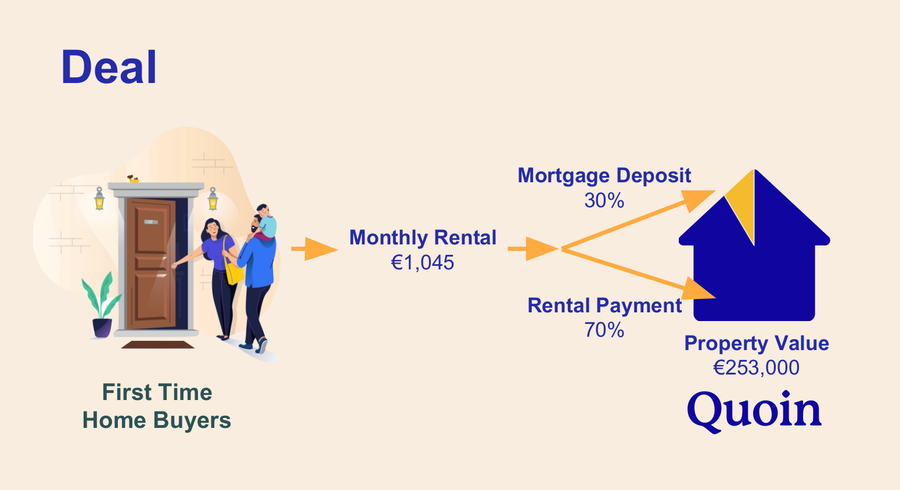
We tested the model with 100 surveys, 30 interviews and ten advisors. The two barriers people named were saving and price.
That pitch carried us through ClimateLaunchpad 2020 and in September we won the European final. From there we went on to compete at the Global Grand Final. We also won a £5,000 DDI Graduate Enterprise Grant.
The seller portal
Building the houses ourselves needed capital a student start-up doesn't have. So we kept the financial mechanism and pointed it at people who already own homes, letting owners sell to the people living in them and build it back with them over time.
There is not one housing crisis, there are five.
Of more than 100 people we surveyed, 73% were interested in Rent-to-Deposit. Three quarters expected saving a deposit to take longer than four years.
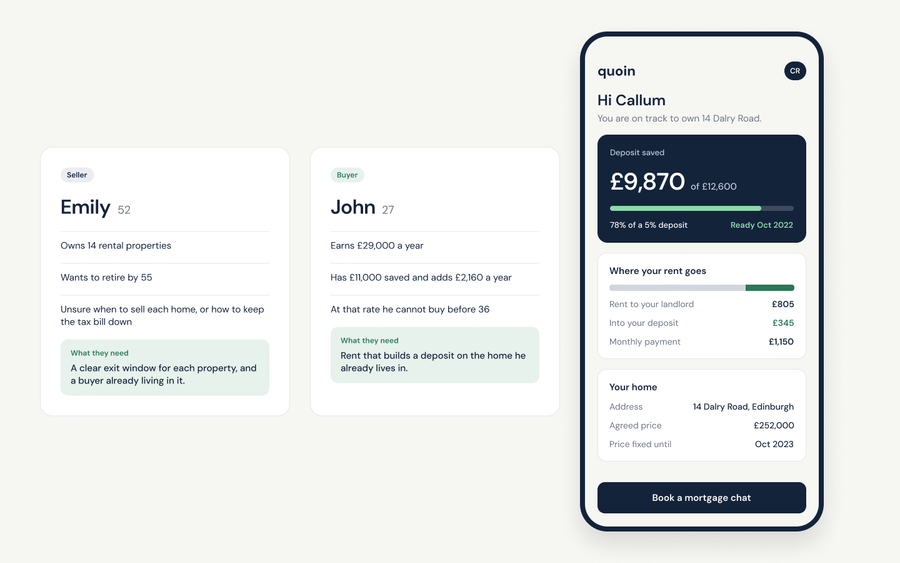
Our seller persona was Emily, with 14 rental properties, a plan to retire at 55 and no clear signal on when to sell or how to limit the tax bill. For Emily a tenant saving to buy the home is the buyer waiting when the lease ends. That made the seller portal the product. It shows what the portfolio is worth, what it earns and how close each tenant is to their deposit.
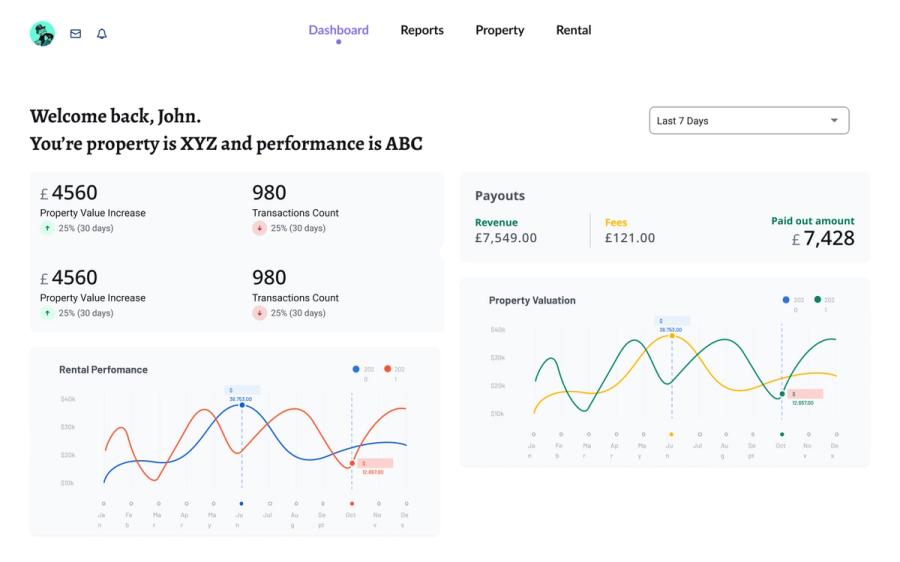
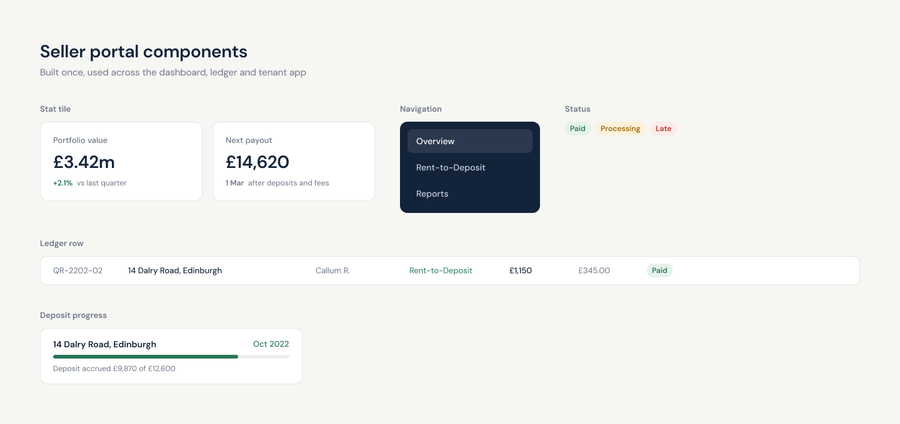
The screens here are a rebuild of that portal because the 2022 version still carried template filler. It had dollar amounts, US dates, a transaction count no landlord needs and a welcome line that still read XYZ and ABC.
The rebuild starts from the two people the model has to serve. Emily needs the valuation and where it's heading, the payout landing on the 1st, and which homes reach their exit window and when. John, the 27-year-old buyer from our research, needs to see his rent turning into a deposit and so the tenant app leads with his balance and shows where every payment goes. Both sides run on one small set of components, and every figure on them is illustrative.
The rebuilt dashboard answers the questions a landlord planning an exit asks first, and its figures are illustrative.
Pared back
Quoin Systems was incorporated in November 2021 and I was a director until December 2022, running it side by side with QikServe until my role there expanded so much that I stepped back. Each version since has been more pared back. Today it gives buy-to-let investors valuations, growth projections and yield, the core of that dashboard with the rest of the model stripped away.